


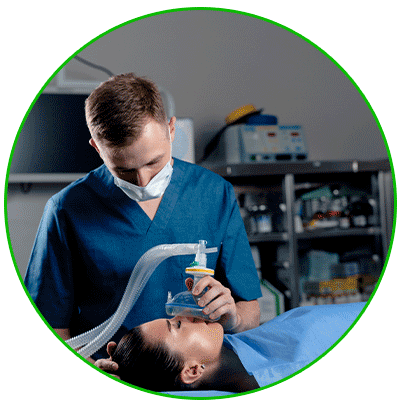
SPES Hospital takes pride in having a dedicated team of anesthesiologists and critical care specialists who play a pivotal role in ensuring the safety and comfort of patients undergoing surgical procedures. They are not only responsible for administering anesthesia but also closely monitor patients during surgery, making real-time adjustments as needed to optimize outcomes. Our critical care unit is equipped with state-of-the-art technology to handle emergencies, providing round-the-clock support to patients in critical conditions.
Frequently Asked Questions
An anesthesiologist plays a crucial role in ensuring the comfort and safety of patients during surgery. They administer anesthesia to induce unconsciousness or pain relief, closely monitor vital signs throughout the procedure, and make adjustments to anesthesia levels as needed. Their expertise ensures a smooth and pain-free surgical experience.
Local anesthesia is used to numb a specific area of the body, often for minor procedures like dental work.
Regional anesthesia blocks sensation in a larger part of the body, such as an entire limb, and is commonly used for surgeries like joint replacements.
General anesthesia renders the patient unconscious and pain-free, used for more complex surgeries where the patient needs to be completely unaware and immobile.
Critical care specialists, also known as intensivists, are responsible for managing the care of critically ill patients in the Intensive Care Unit (ICU). They oversee the patient's treatment plan, monitor vital signs, coordinate with other specialists, and make critical decisions to stabilize and improve the patient's condition.
While anesthesia is generally safe, there are risks and side effects, including:
- Allergic reactions to anesthesia drugs.
- Breathing difficulties during or after anesthesia.
- Nausea and vomiting post-surgery.
- Rare complications like awareness under anesthesia (being partially aware during surgery).
Anesthesiologists carefully assess and mitigate these risks to ensure patient safety.
The recovery time from anesthesia varies depending on the type of anesthesia used, the individual's health, and the complexity of the surgery. In most cases, patients start waking up shortly after the surgery, but it may take several hours to fully recover from the effects of anesthesia. Patients are closely monitored during this time to ensure a smooth and safe transition from unconsciousness to full consciousness.
